Hôtel Caron de Beaumarchais Paris Le Marais

L’Hôtel Caron de Beaumarchais. Son décor, l’art de vivre à Paris au XVIIIème siècle

[row] [col span__sm= »12″]

Ouvert en Mars 1993, l’hôtel s’est voulu un hommage à Beaumarchais (1732 – 1799) et à son époque. La recherche d’œuvres et de documents authentiques et significatifs a dirigé toute l’évolution de l’hôtel et son décor.

La découverte, pendant les travaux, d’une première édition du Mariage de Figaro, la pièce la plus célèbre de Beaumarchais, a conduit le premier décor des chambres. La reliure du livre en mauvais état a permis de séparer les pages et de les intégrer pour chaque chambre dans des encadrements en forme de pêle-mêle parmi des lettres manuscrites, des gravures de livres, des actes notariés, tout un lot de documents originaux du XVIIIème siècle acheté à un marchand de papiers anciens de Lyon.

Au fur et à mesure des années, des œuvres originales, en majeure partie des meubles et des objets du XVIIIème siècle ont complété le décor. Plus de 15 ans de recherche sans d’ailleurs vraiment chercher. La table à jeu, le piano-forte, la harpe, la sculpture, le lustre de la réception, les deux lanternes des baies vitrées…, les pièces les plus significatives se sont trouvées face à nous, évidentes. Au hasard de promenades, elles se sont imposées d’elles-mêmes : la table à jeu dans la vitrine d’un antiquaire près de l’Hôtel Drouot, quelques œuvres au Marché aux Puces, et la plupart à Paris, dans le quartier, le Marais, le Marché Saint Paul ou l’Ile Saint-Louis.

Deux rénovations de l’Hôtel Caron de Beaumarchais ont été deux moments importants, catalyseurs. Celle de 2004-2005 voit le renouvellement du décor des chambres et celle de 2008, qui donnera lieu à d’importants travaux de toiture et de peinture, est celle de la rénovation de tout le décor du salon. Deux dates importantes qui à chaque fois amènent une réflexion et stimulent la découverte d’œuvres nouvelles.

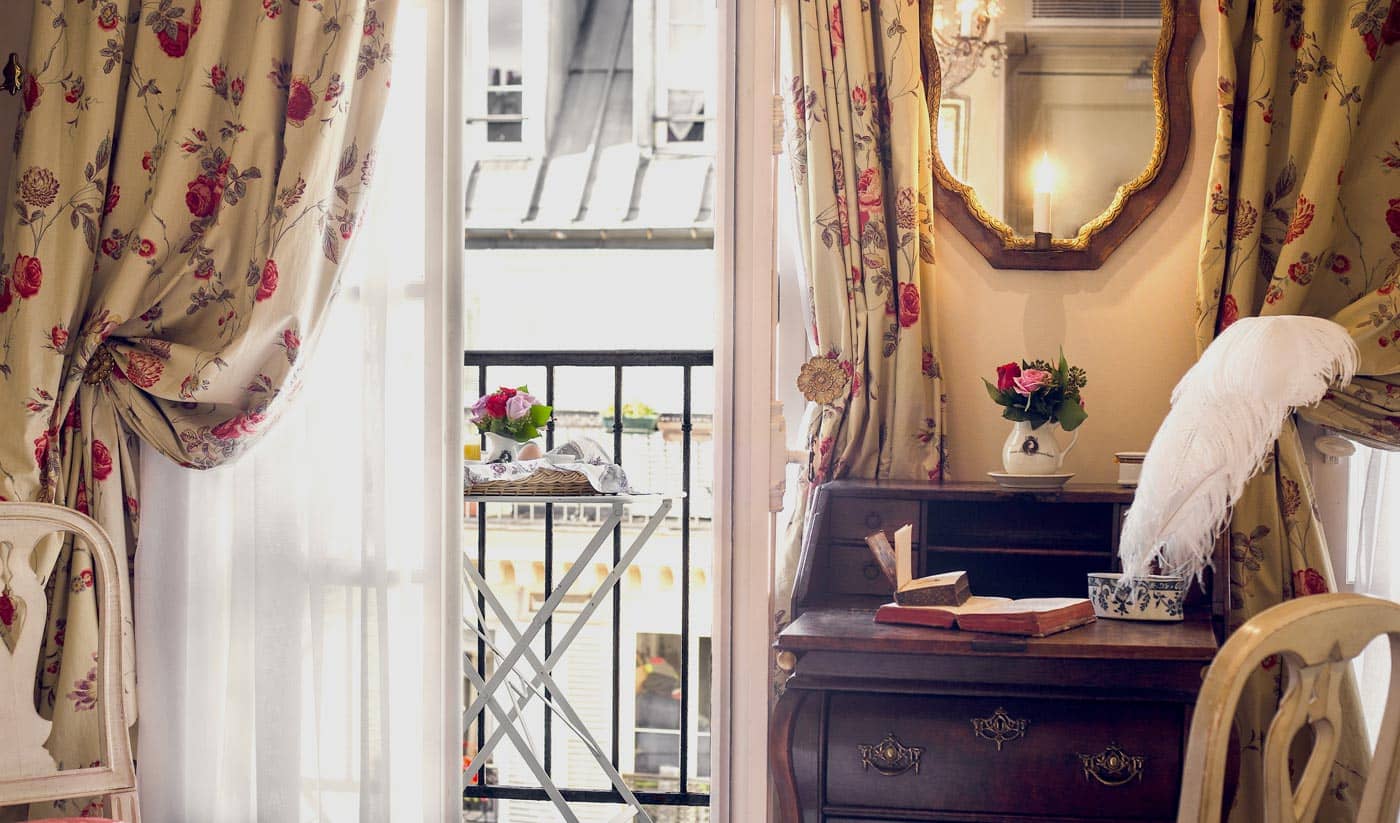
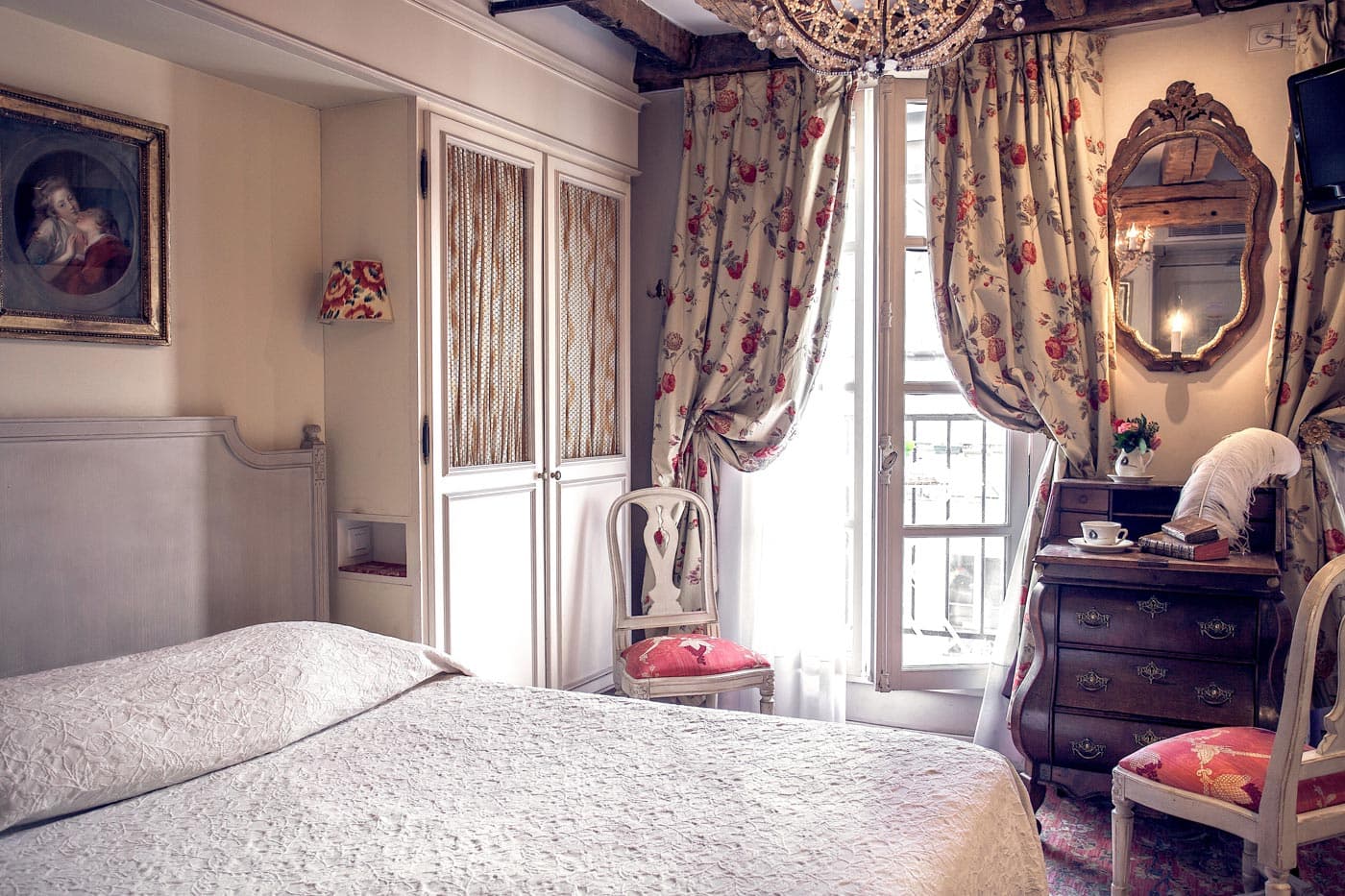
Dès 2004, dans les chambres, accompagnant le renouveau de tous les tissus d’ameublement et de la moquette, ce sont des lustres et des miroirs mais aussi des secrétaires, des bureaux de pentes, des « Bonheurs du Jour », antiquités qui métamorphosent le décor des chambres.

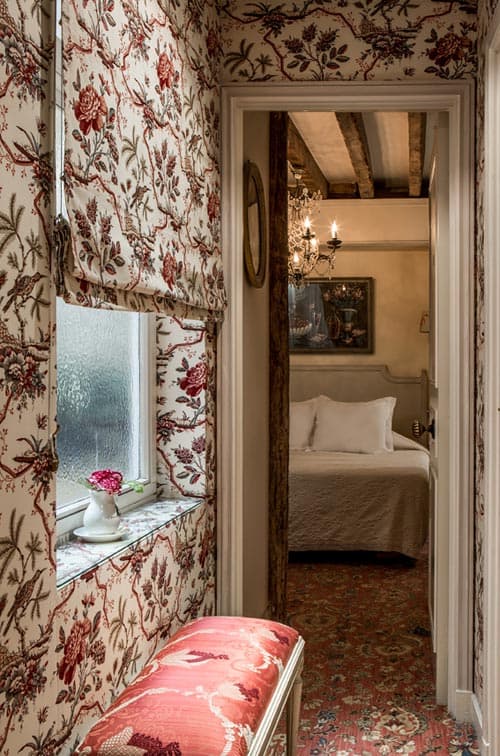
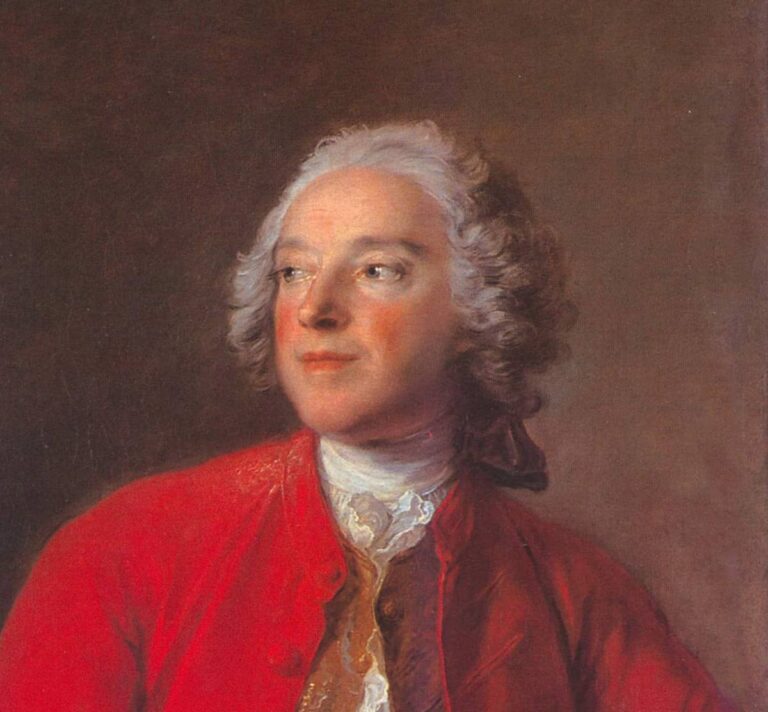
Et c’est le choix du tissu qui meublera en 2008 la réception, une moire à décor de roses en rinceaux, qui est la seconde étape importante. Ce tissu imprimé d’après un document original Louis XV, contraste avec le tissu précédent (un tissu broché en rayure Louis XVI) et amène une seconde métamorphose. On remonte en chronologie à l’époque Louis XV. Un contexte plus joyeux, plus frais, plus coloré dans l’histoire de l’art. Un contexte, où dans les arts, les femmes imposent leur goût, les favorites du roi, Madame de Pompadour pendant tout le règne de Louis XV ; c’est son portrait qui introduit le site internet de l’hôtel depuis 2005. Une période heureuse où Paris va donner le ton au monde entier et consacrer l’art français comme référence incontournable du bon goût, de l’art de vivre, jusqu’à nos jours.

Un décor plus libre, plus osé dans les rapports des formes et des couleurs. 15 ans d’expériences pour se permettre les audaces et les libertés du style Louis XV.

Qu’est-ce qu’un décor ? C’est là toute la question. L’acquisition des pièces d’antiquité nous a donné une réponse : ce sont les œuvres qui s’imposent, qui viennent à nous, comme j’essaie de le dire un peu plus haut. Ces oeuvres s’imposent aux lieux qui les reçoivent, créent les relations, font le décor. C’est tout le contraire de la décoration qui met en place des objets, du mobilier, des œuvres d’art à partir d’un plan d’architecture, selon un schéma préconçu. J’ai cherché tout autre chose : suggérer un ensemble par la présence significative de belles choses, c’est-à-dire des objets, mobiliers ou tableaux forts et suggestifs, des objets à même d’attirer à eux seuls, d’abord, le regard et de créer des relations. Ce que les italiens appellent ambiente, un terme intraduisible et que le mot « ambiance » ne suffit pas à décrire.

Cette atmosphère, ces confrontations, c’est cela un décor. Un décor qui s’éloigne de la décoration : une mise en relation sensible d’œuvres et d’objets à travers le temps et non plus une simple mise en scène pour le plaisir des yeux.

Des oeuvres replacées dans un contexte comme une forme de cohérence, – en l’occurrence ici, Beaumarchais, le Marais, le XVIIIème siècle et l’art français-, nous parlent ainsi mieux du passé. Elles nous en parlent au présent, nous font mieux sentir ce qu’est Paris et la culture de notre pays, ce que, notamment, le XVIIIème siècle nous a apporté, ce qu’il nous dit aujourd’hui.

Ce passé n’est pas totalement passé s’il nous enrichit et nous rend plus inventif. C’est en ce sens qu’un décor peut devenir une expérience de vie. Et c’est toute l’ambition de cet hôtel, en plus du confort et du bien être, que de communiquer ce sentiment et cette expérience à ses clients, français et étrangers, pour accompagner leur séjour. Introduire leur séjour à l’art et à la culture français, à cet art de vivre né à Paris au 18ème siècle.

[/col] [/row]
Publications similaires

Hôtel Caron de Beaumarchais Paris Le Marais

The Hôtel Caron de Beaumarchais in the historical Marais quarter. The french art of life in Paris

[row] [col span__sm= »12″]

Opened in March 1993, the hotel was conceived as an homage to Beaumarchais (1732-1799) and his period. The occasion to remind that the well known play writer created his main works, in the Marais, 2 steps from the hotel at number 47, rue Vieille du Temple. His house perfectly conserved has been recently renovated.

The decor of the hotel

The quest for authentic and significant objects and documents has orientated the entire evolution of the hotel and its décor. 

During the preliminary installation works, the discovery of a first edition of the Marriage of Figaro, Beaumarchais’s most famous play, inspired the initial decoration of the rooms. The poor state of the book’s binding enabled the pages to be separated and integrated in each room under frames displaying a montage of handwritten letters, book engravings, deeds, a whole batch of original 18th-century documents bought from a dealer in ancient documents from Lyon.

As the years went by, original pieces, mostly 18th-century furniture and objects, replaced the copies and completed the décor. Fifteen years of searching without really looking, since the pieces seemed to come to us. The card table, the piano forte, the harp, the sculpture, the chandelier in the reception, the two lanterns in the bay windows – need one mention them all?- the most significant pieces appeared before us, obvious. Haphazardly, at the turn of a corner, they imposed themselves of their own will: the card table in an antique dealer’s shop window close to Hôtel Drouot, some pieces at the flea market, and most of them in Paris, in our neighbourhood, the Marais, the Marché Saint Paul or on Ile Saint-Louis.

The 2 hotel’s renovations

The hotel’s two renovations were important moments, catalysers. That of 2004-2005 saw the renewal of the rooms’ décor and that of 2008, which also included overall painting and roof-repair works, when the lobby was completely redecorated. Two important dates that each brought with them a moment of reflection and sparked off the discovery of new elements.

In 2004-2005, in the rooms, to set off the complete renewal of the upholstery and the fitted carpets, the rooms’ décor was metamorphosed not only by adding chandeliers and mirrors, but also antique writing-desks, sloped desks and “Bonheurs du Jour”.

In 2007, as a forerunner to the renovation of the reception, came the turn of the lift and the breakfast lounge to be redecorated. And it was the choice of fabric furbishing the reception in 2008, a moiré fabric with rose foliage, which introduced the second important phase. This fabric produced according to an original Louis XV document, contrasts with the previous fabric (a Louis XVI striped brocade) and heralds in a second metamorphosis. One goes back in time to the period of Louis XV. A gayer context in the history of art: fresher, more colourful. A context in which the arts are dominated by women, not least by Madame de Pompadour, whose portrait, moreover, introduces the hotel’s website, created in 2005. A happy period when Paris gave the tone to the whole world, consecrating French art as an inescapable reference of good taste and the art of living, lasting even to the present day.

A décor that was freer, more daring in the relations of form and colour, harder to bring off and which I would never have envisaged in 1993: fifteen years of experience enabling me to dare the audacities and liberties of Louis XV’s style.

What is a décor?

That is the question. The acquisition of antique pieces during the last fifteen years has provided me with an answer: it is the works themselves that become essential, they that come to one, as I have tried to explain above. These works become crucial to the places that receive them, they create the relations, establish the décor. It is quite the contrary of decoration, which places the objects, the furniture, the works of art based on an architectural plan, according to a preconceived idea. I have attempted something quite different: to suggest a whole through the significant presence of beautiful things, that is to say forceful and evocative objects, pieces of furniture or paintings, which are capable of drawing the eye first by their very presence and of creating relations. What the Italians call “ambiente”, a term that cannot be translated and that the word “atmosphere” falls short of describing.

These juxtapositions, this “ambiente”, that is what represents a décor. Far from decoration, it is a sensitive experience that involves relating works and objects to each other through time; it is a life experience and not just the creation of a scenario for the pleasure of the eyes.

These works, reorganized here in a context that serves as a kind of coherence (in our case, Beaumarchais, the Marais, the 18th Century and French art), can in this way speak to us more meaningfully of the past. They address us in the present tense and help us get a better feeling for what Paris and our country’s culture represents, in particular for what the 18th Century has contributed, what it means to us nowadays.

The past is not totally past if it enriches us and makes us more creative. It is in this sense that a décor can become a life experience. And all that this hotel aims to achieve, besides the comfort and well-being of its guests, is to communicate this feeling and experience to both french and foreign visitors during their stay.

[/col] [/row]

Publications similaires